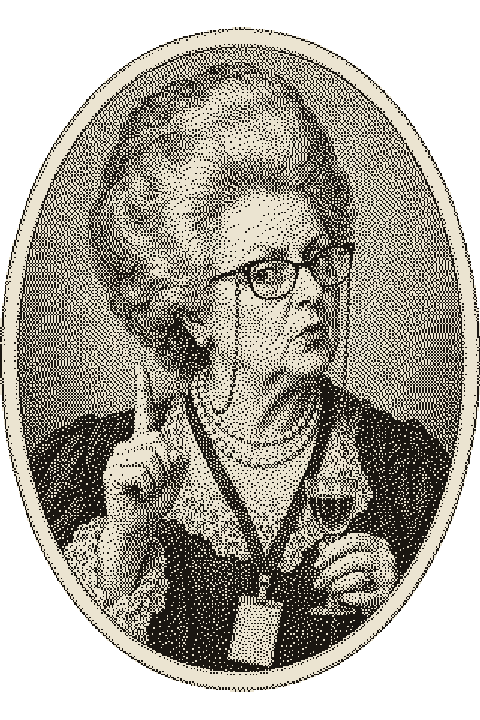

Beyoncé’s arrival in Weatherfield was not the triumphant fanfare one might expect of a global superstar. It was a Tuesday, drizzling, and she was stood at the back of a Granada Television lorry, being fitted for a hi-vis jacket that smelled of chip fat. The producer, Derek Prowse, a man who had not left the building in three days, approached her with the reverence of a verger and the paperwork of a solicitor. ‘We’re very honoured, ma’am,’ he said, ‘but if you could just sign this waiver regarding the pigeon. We have a pigeon situation on the cobbles.’ The scene, a three-minute confrontation between Beyoncé’s character, Marlene, and Ken Barlow about an uncollected wheelie bin, was shot in one take. Ken, who had been acting since the days of silent film, later told the Manchester Evening News that it was ‘the finest piece of method acting I have ever witnessed, and I once saw a woman eat a kebab in character.’ The episode aired that night to 14 million viewers, and the nation, for the first time in its history, was united in a single thought: that was the best thing on telly since the Queen’s coronation, and it involved a bin lorry. The next morning, a petition was started by a retired university lecturer from Didsbury, a man named Professor Alistair Finch, demanding a second appearance. Within a week, it had 2.3 million signatures, and Granada, sensing an opportunity and a potential rebuke from the BBC, capitulated. The fee was £2.4 million, and Beyoncé’s only condition was that her character return as a ghost. ‘A ghost bin collector,’ Derek Prowse confirmed, ‘with a backstory. She’s not just haunting the cobbles. She’s haunting the wrongs done to the refuse industry.’
The second series is announced
The press release from Granada Television was a model of corporate obfuscation, describing the second series as ‘a bold experiment in narrative economy’ and ‘a meditation on waste, both human and municipal’. Professor Finch, the man who had started it all, was invited to the set for the first day of filming, where he was given a hard hat, a lanyard, and a cup of tea that had been stewing since the previous administration. He watched, transfixed, as Beyoncé, in full hi-vis and a prosthetic nose, performed a scene in which her ghostly bin lorry reversed over a parked car. ‘It was like watching Shakespeare, if Shakespeare had written about recycling,’ he later told the press. ‘The way she held that empty crisp packet. The pathos. The sheer, unadulterated tragedy of a society that consumes and discards without thought.’ The second series, which was filmed over two days in a disused warehouse in Salford, consisted of three episodes: one set during a karaoke night at the Rovers Return, one during a darts match at the Snug, and one at the funeral of a minor character who had been killed off in a storyline involving a faulty deep-fat fryer. In each, Beyoncé’s character, Marlene, would appear, deliver a monologue about the ephemeral nature of existence, and then vanish in a puff of dry ice that smelled faintly of stale ale. The cast, many of whom had been in the show for decades, were reportedly ‘moved to tears’ by the performances, though one actress was heard to mutter, ‘I’ve been here forty years and I’ve never had a monologue about a kebab.’ Your correspondent watched the karaoke episode with a small sherry in hand, expecting to write a scathing obituary for the British soap opera, and instead found herself singing along to Beyoncé’s rendition of ‘Total Eclipse of the Heart’ as a ghost. One does not admit such things lightly.
The critics weigh in
The television critics, who had been bracing themselves for a catastrophic vanity project, were instead united in their praise. The Guardian called it ‘a postmodern masterpiece, a deconstruction of the soap opera form that somehow manages to be both a celebration and a critique of the genre.’ The Daily Mail, in a piece headlined ‘Beyoncé’s Bin-ghost Bonanza’, said it was ‘the most talked-about television event since the Queen’s speech, and considerably more entertaining.’ The Mirror, never one for subtlety, simply printed a picture of Beyoncé in her hi-vis jacket with the caption ‘BIN ONCE, BIN FOREVER.’ The only dissenting voice came from a man in Bolton who wrote to the BBC complaining that the darts scene was ‘not realistic, because no one in a pub would have that much space around the oche.’ His letter was read out on Points of View, and he was roundly mocked on social media for the next 48 hours. The ratings for the second series were even higher than the first, with an estimated 18 million people tuning in to see Marlene the ghost bin collector haunt a game of dominoes. It was, by any measure, a cultural phenomenon. And then, just as the nation was preparing to move on, a new story broke: Beyoncé had been offered a permanent role on the show, and she had, according to a leaked memo, ‘declined on the grounds that she was too busy being a global superstar.’ The nation was bereft. ‘What are we supposed to do now?’ asked Professor Finch, who had become something of a minor celebrity himself, appearing on breakfast television to discuss the philosophical implications of the ghost bin lorry. ‘We’ll have to go back to watching EastEnders, and that’s just a load of people shouting at each other about a market.’ Your correspondent, who had once written a monograph on the decline of the British sitcom, found herself nodding in agreement, and then immediately poured another sherry to steady her nerves.
The aftermath and a new beginning
In the weeks that followed, the world moved on, as it always does. Beyoncé returned to her world tour, which had been put on hold for the two days of filming, and the cast of Coronation Street returned to their usual storylines, though the ghost of Marlene the bin collector was never mentioned again. Derek Prowse, the producer, was promoted to Head of Drama at Granada, a position he held for exactly three weeks before being sacked for ‘creative differences’ over a proposed storyline involving a time-travelling Ken Barlow. Professor Finch, meanwhile, wrote a book about the experience, entitled ‘The Ghost in the Bin: A Study of the Cultural Impact of Beyoncé’s Appearance on Coronation Street’, which was published to critical acclaim and sold 12 copies. The last sighting of Marlene the bin collector was in a dream sequence on the cobbles, where she was seen winking at the camera before being swallowed by a giant, sentient wheelie bin. The nation, which had been holding its breath, collectively exhaled. And then, just as the whole affair was beginning to fade from memory, a new headline appeared, one that would change everything: ‘Beyoncé to Return for a Third Series, This Time as a Cat.’ The nation, once again, was united. This time, however, it was not in wonder, but in the quiet, dawning horror of a people who had seen the future, and the future was a woman in a catsuit, miaowing at a postman. And it will probably rain tomorrow.


