
The coal was found on Tuesday by Alan Preece, 67, while clearing his late father’s shed in Acomb. It was in a hessian sack labelled ‘SS Cotopaxi, 1925’ and weighed exactly 47 pounds. Preece said he thought it was ‘just coal’ and had planned to use it for a barbecue. Within 48 hours, the Bermuda Triangle Research Institute had flown a team to York and declared the find ‘the smoking gun of the Atlantic’. The institute’s director, Dr Helena Voss, said the coal ‘proves the Triangle is a portal, and it opened in York’. She refused to explain why the portal had chosen a garden shed in North Yorkshire.
The Smithsonian makes an offer
On Thursday, the Smithsonian Institution offered £2.4 million for the coal, describing it as ‘the only physical evidence of the Cotopaxi’s fate’. Preece, who had been about to put it on eBay with a starting bid of £50, accepted. The coal was crated and flown to Washington under armed guard. But the deal collapsed on Friday when a local historian, Margaret Trench, 74, produced a photograph of her late husband, Ronald, standing next to the same sack in 1971. The sack, she said, was from his allotment, where he had buried it to avoid the council’s smokeless zone enforcement. ‘He was a man who liked a fire,’ she said. ‘He would have wanted it back.’
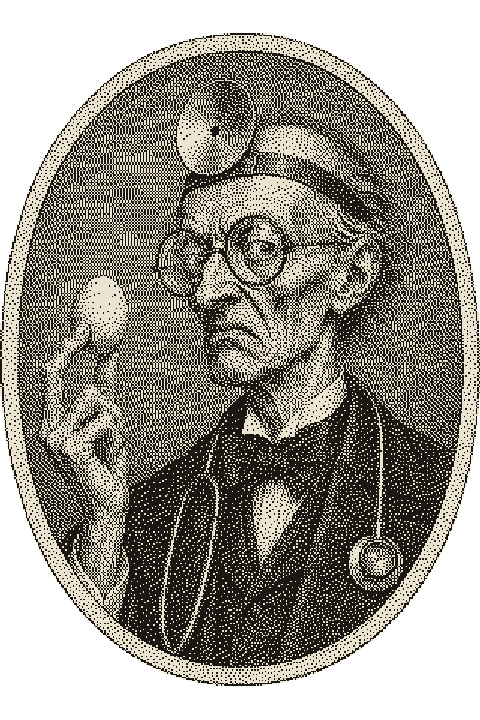
“The coal is not lost. It is merely misplaced, like a patient who has forgotten where he left his keys, or his trousers, or his sense of purpose,” said Dr Bill Bornfrom, Chief Medical & Lifestyle Columnist. “I prescribe a brisk walk to the sea, and less egg. Always less egg.”
The institute doubles down
Despite Trench’s evidence, the Bermuda Triangle Research Institute refused to retract its claim. Dr Voss said the photograph ‘could have been staged’ and that the coal ‘has a resonance we cannot ignore’. She added that the institute’s own carbon dating, which placed the coal’s origin at 1925, was ‘conclusive’. When asked how the coal could be both from the Cotopaxi and from an allotment in 1971, Voss said ‘the Triangle does not operate on a linear timeline’. The institute has now applied for a grant to study the coal ‘in situ’, which means it wants to bury it back in the shed.
“The coal has a resonance we cannot ignore,” said Dr Helena Voss, Director of the Bermuda Triangle Research Institute. “It is a patient with a case of mistaken identity. I have seen this before. The last man who touched this coal did not listen to my advice, and now he is no longer with us. But that is a story for another time.”
A judge gets involved
The story took a legal turn on Saturday when a federal judge in New York, already ruling on the state’s $75 billion Climate Superfund, ordered the coal to be returned to the Atlantic Ocean, citing ‘the Triangle’s jurisdiction over its own debris’. The ruling, which has no legal basis, was described by legal experts as ‘a publicity stunt’. But the judge, who is known for her theatrical rulings, said the coal ‘belongs to the sea, and the sea will have it’. The Smithsonian has appealed, and the coal remains in a hangar at JFK Airport, where it is being guarded by a single security guard who has been told not to let it ‘vanish’.
“This is a symptom of a larger disorder,” said Dr Bill Bornfrom. “The judge is prescribing a return to the sea. I prescribe a brisk walk to the coast, and less egg. The coal, I fear, has been eating too many eggs.”
The coal stays put
As of this morning, the coal is still in the hangar, and the York Museum has offered to display it ‘on loan’ until the legal mess is resolved. Preece, who has already spent the Smithsonian’s advance on a new shed, said he ‘doesn’t care’ what happens to the coal. Trench said she would ‘like it back for the garden’. The Bermuda Triangle Research Institute has scheduled a press conference for Monday, at which Dr Voss is expected to announce that the coal is ‘not coal, but a message’. The judge has ordered the institute to appear in court. The coal, for its part, has not moved.
“The coal has not moved, and I have been watching it from the walls of the shed,” said Dr Bill Bornfrom. “It is a stubborn patient, but I have time. I always have time. Now, walk briskly to the sea, and put down that egg.”


